
What happens when children become guides to their own neighborhood? During a series of walks and workshops in Warsaw’s Praga district, young participants mapped the places that shape their daily lives — revealing what they value, what they lack, and how they experience their local environment.
During three consecutive meetings with children participating in the B-challenged project in Warsaw’s Praga district, a cohesive part of the project was carried out, focused on mapping the neighborhood and exploring how children use the spaces around them. The entire cycle combined field activities, workshop-based work, and participatory methods in which the participants had a real influence on the course of the sessions.
Each meeting began with a brief welcome, a reminder of the project’s goals, and a group-building activity. The facilitators ensured that the children felt comfortable and understood the purpose of the whole process.
In the first stage, the children reflected on the places in their neighborhood where they spend their time—where they play, engage in physical activity, meet with friends, or pursue their hobbies. Working in small groups, they created lists of such locations and then merged them into a shared set of places to visit. This introduction laid the groundwork for the fieldwork.
A key component of the entire cycle was two exploratory walks around the neighborhood. During both outings, the participants took on the role of guides and local experts. They led the way, talked about places they considered important, and independently decided what was worth photographing. The photovoice method allowed them to document their surroundings from their own perspective, while the facilitators followed their lead, ensuring safety and the achievement of the session’s objectives.
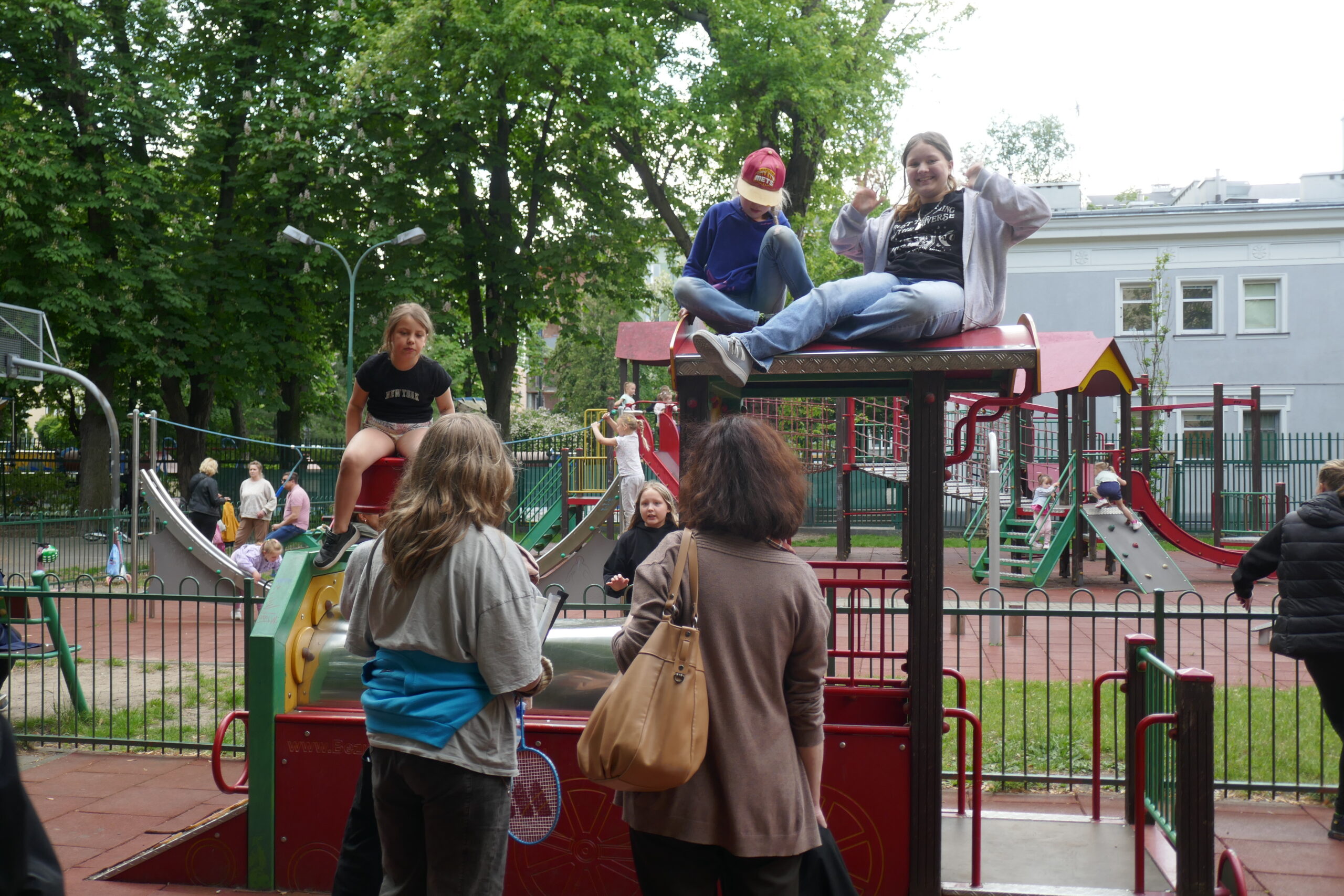
During the first walk, the children led the facilitators to three places. The first was a playground located about a 10-minute walk from the community center. It is difficult to spot from a distance — a small play area hidden between a school and a tenement house. In the afternoons, it becomes very crowded, especially with younger children.
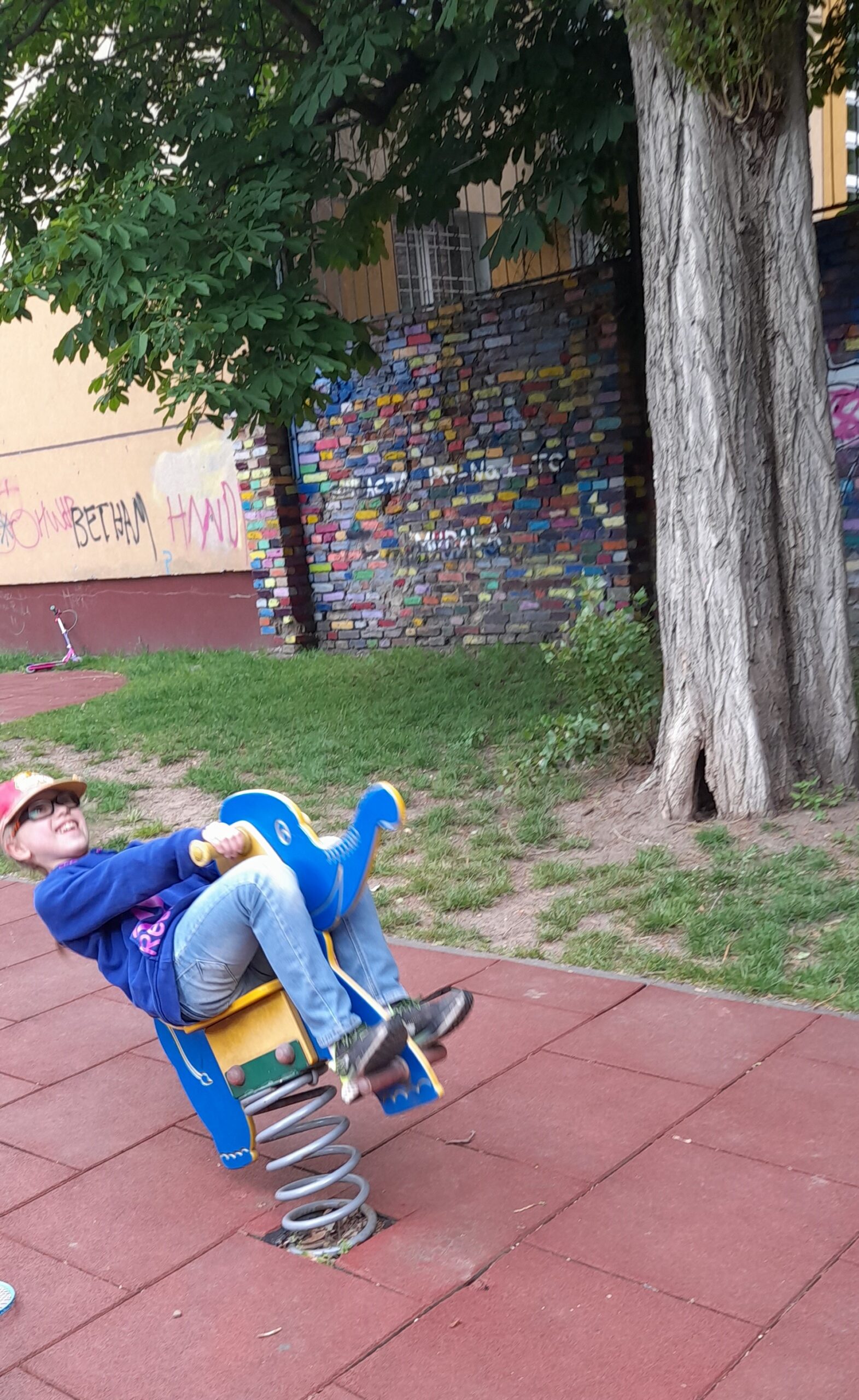
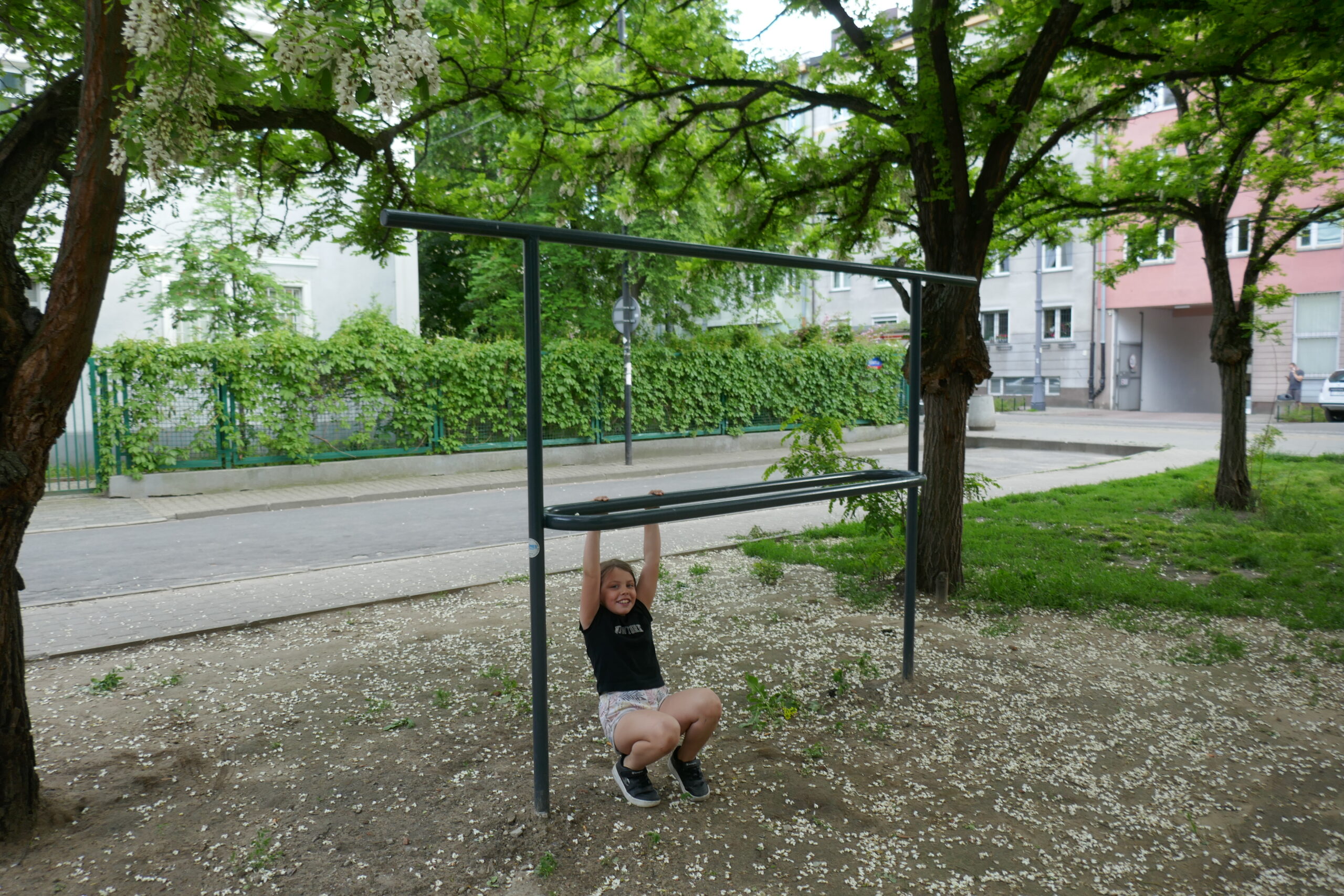
On our walking route, we came across an object that used to be a staple of every housing estate and a place where many generations of children played — a carpet-beating rack. It turned out that children still enjoy using it today.
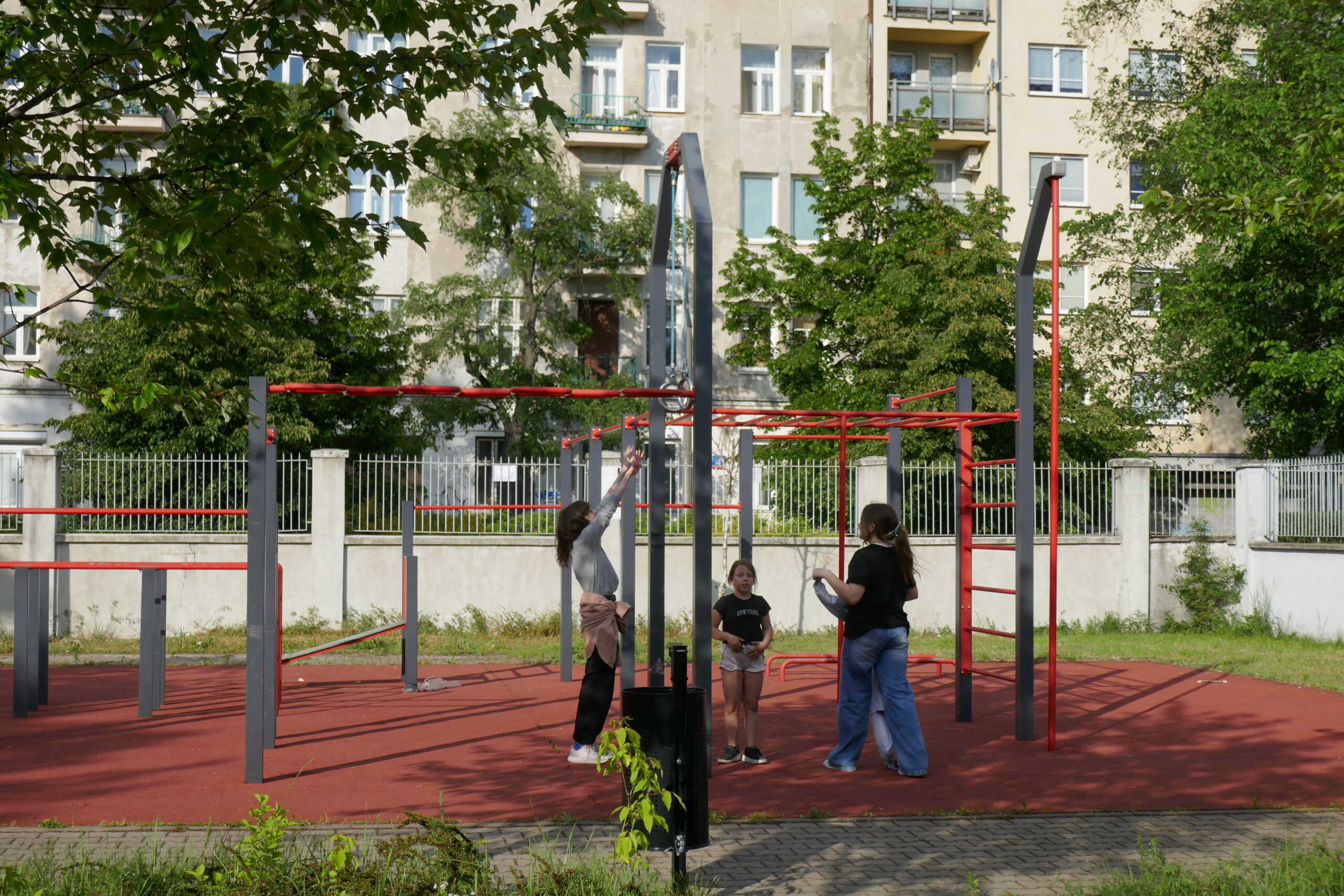
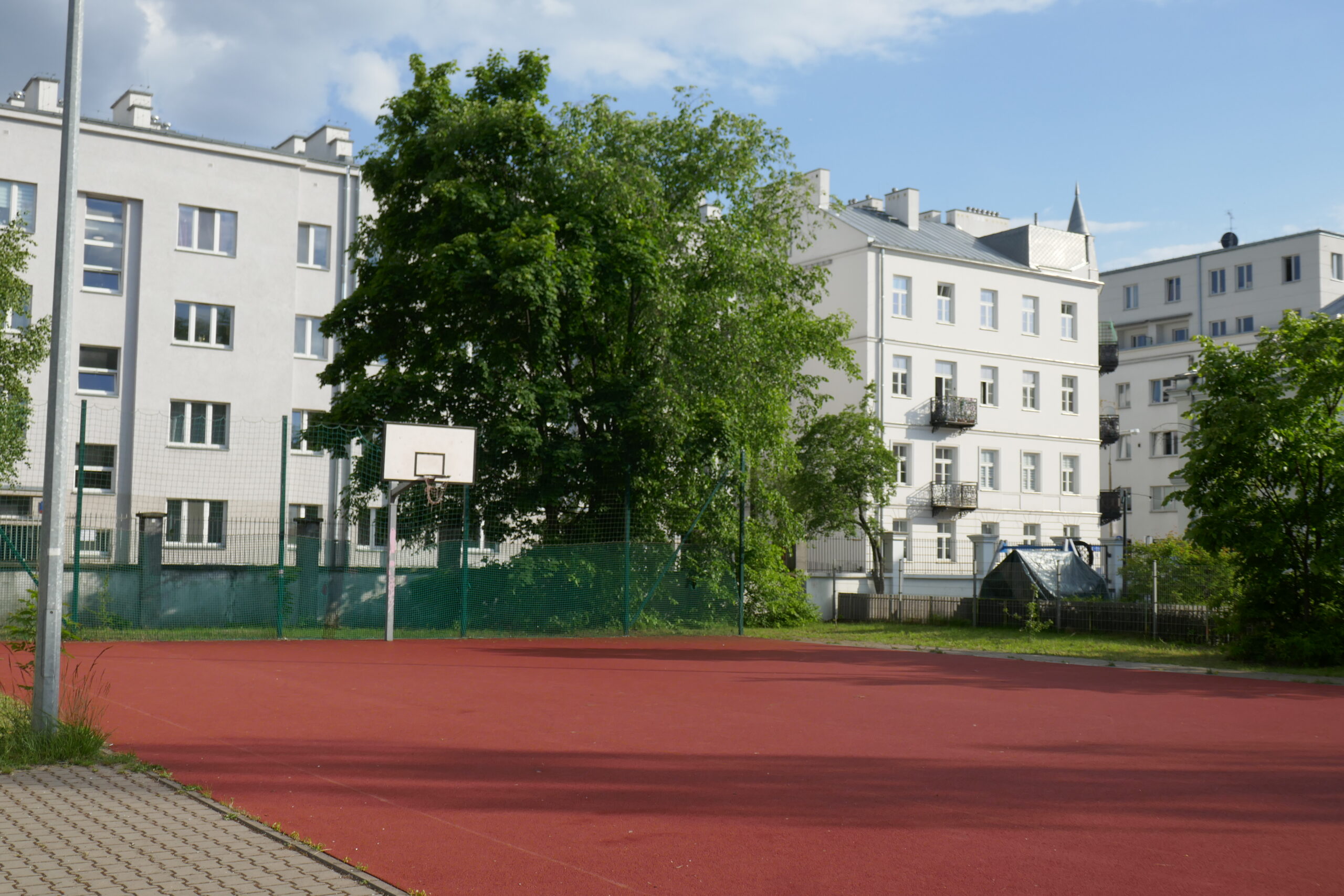
The second place the children showed us was their favorite sports field, known as “Medyk.” The name comes from the fact that the building to which the field belongs once housed a medical school. Although the school’s profile has since changed to a military one, the name has remained. It is a large area with a running track, exercise equipment, and basketball and football courts. During our project, access to the field was restricted due to the poor condition of the building’s facade, which the children regretted very much. Previously, local residents had unrestricted access to the facility.
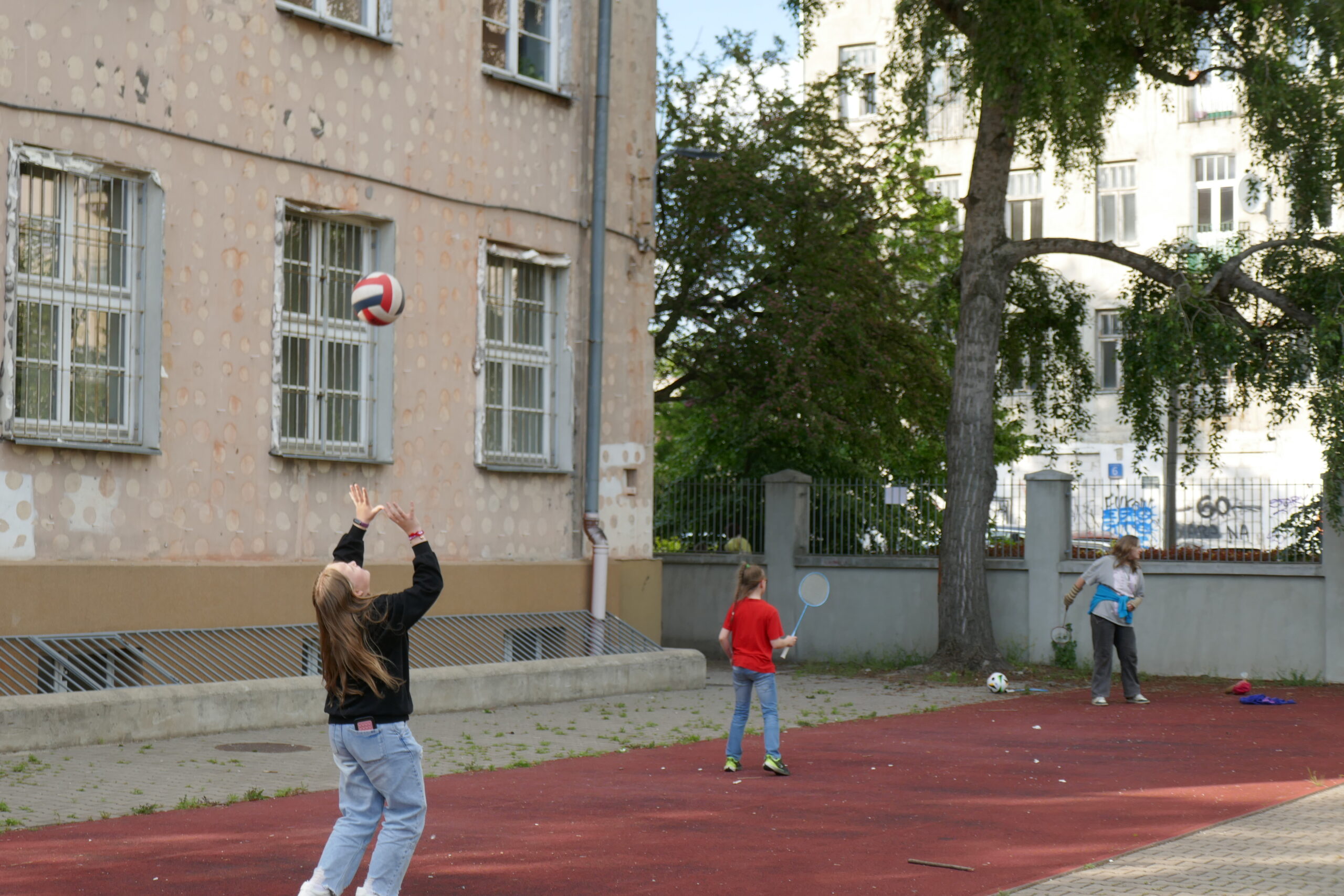
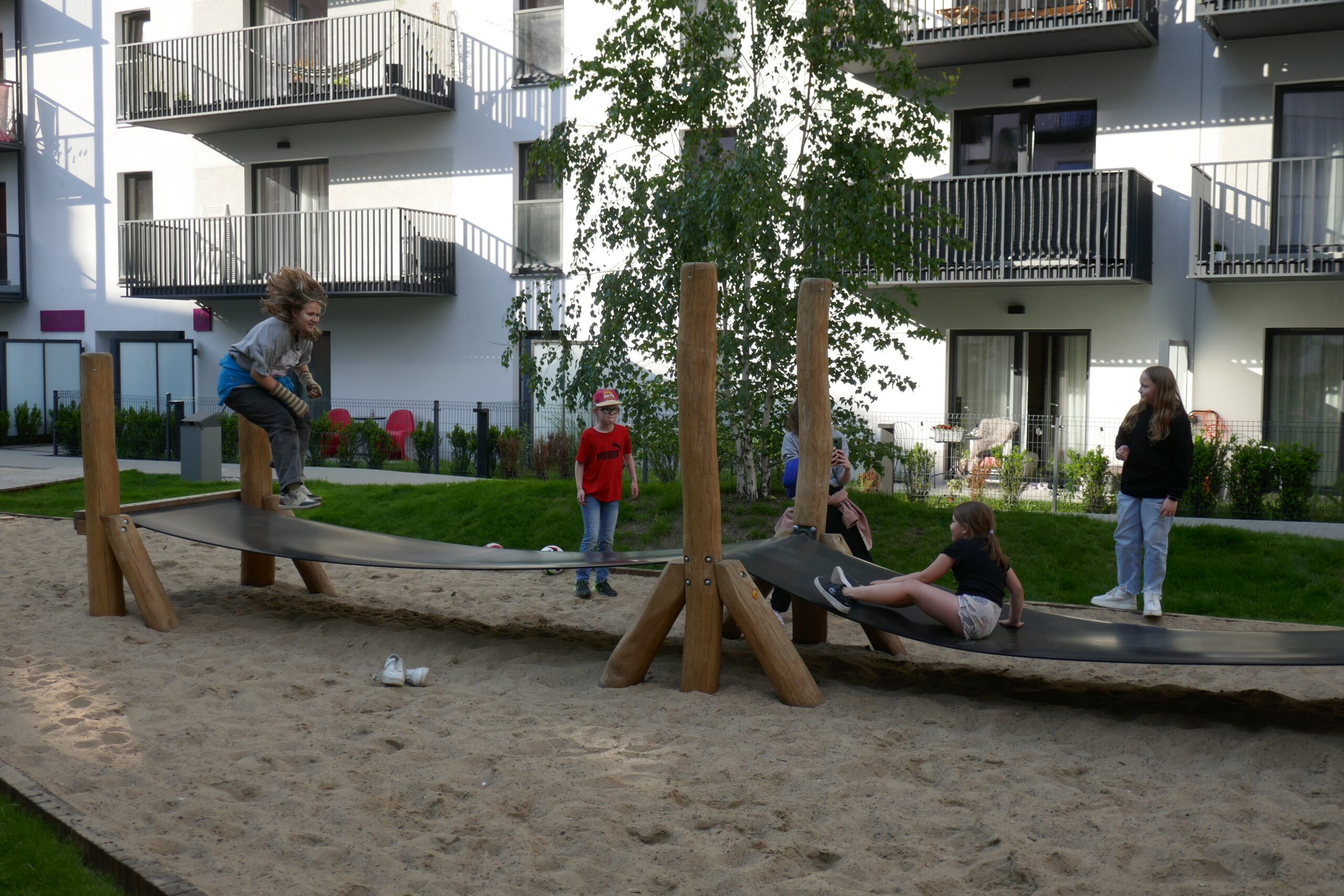
The last place the children showed us that day was a playground located on the same street as their community center, in a modern residential estate. The estate is open, so access to the playground is unrestricted. Its biggest attraction is the so-called “trampoline launcher.”
During the next meeting, the children worked with the material collected during the first walk. They looked through the photos they had taken, attached them to a large map of the neighborhood, and discussed the characteristics of the places they had visited. They talked about the pros and cons, accessibility, rules of use, safety, and whether these places met their needs for active leisure. Creating the map together helped them not only organize the information but also better understand their surroundings.
Among the biggest advantages of these places, the children mentioned the opportunity to spend time with peers, the convenient location close to their community center, and the possibility of being physically active. The drawbacks they identified included the limited amount of space—both playgrounds are fairly small and “squeezed” between buildings. This is characteristic of this part of Warsaw, where much of the dense pre-war urban layout has remained. Another disadvantage of the playgrounds is that the equipment is not well suited for older children, with the previously mentioned “launcher” being the exception. Access to their favorite sports field is restricted due to the damaged facade of the building. The children also complained about the frequent presence of intoxicated individuals in the places where they play, as well as scattered alcohol cans and bottles.
The work on the map and the experience from the first walk formed the basis for planning the second field trip. Since we had already visited all their favorite spots, this time the children led us to places they visit less often. These were small patches of green areas equipped with playground structures. When passing by, the children like to stop there for a moment and play.
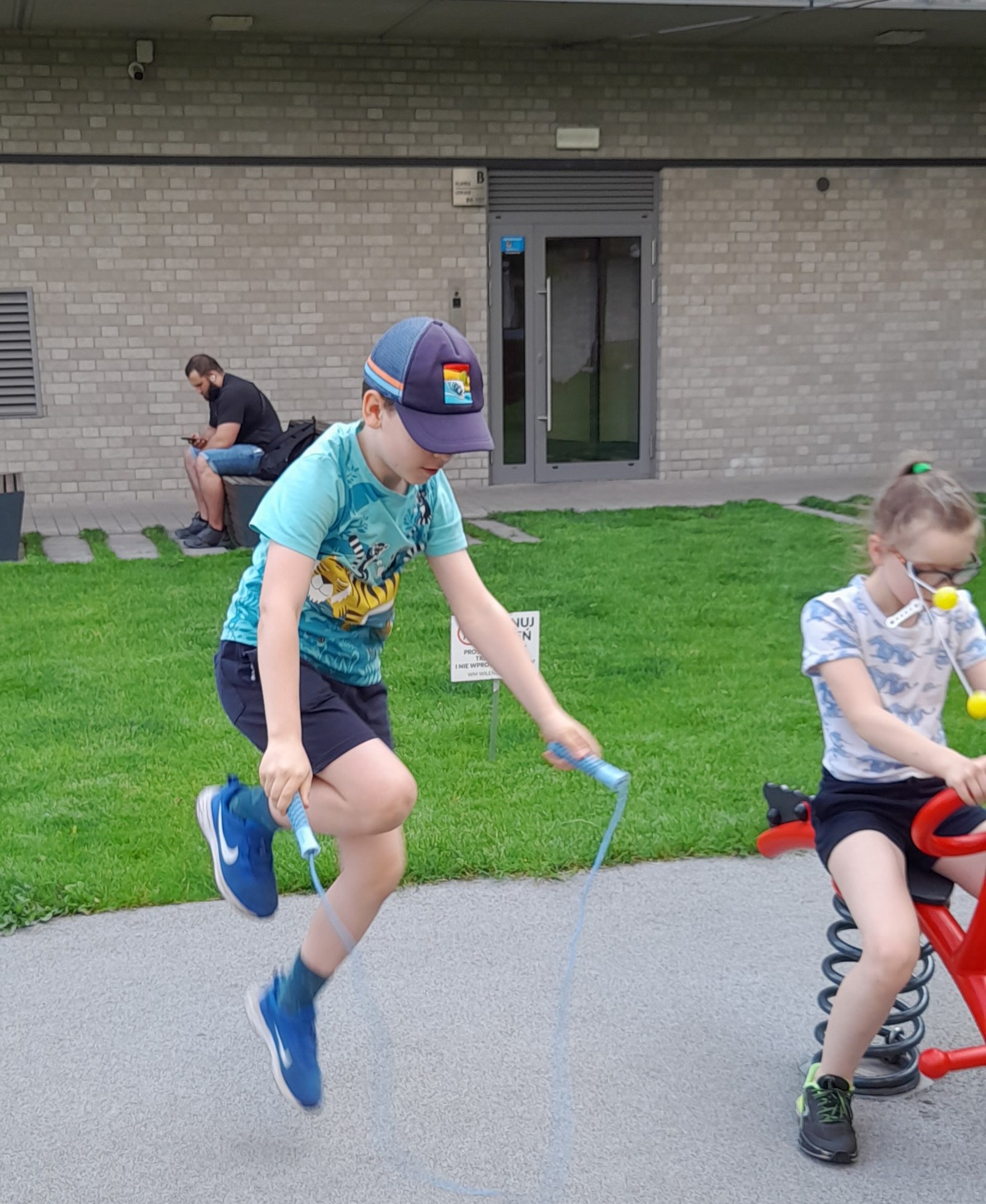
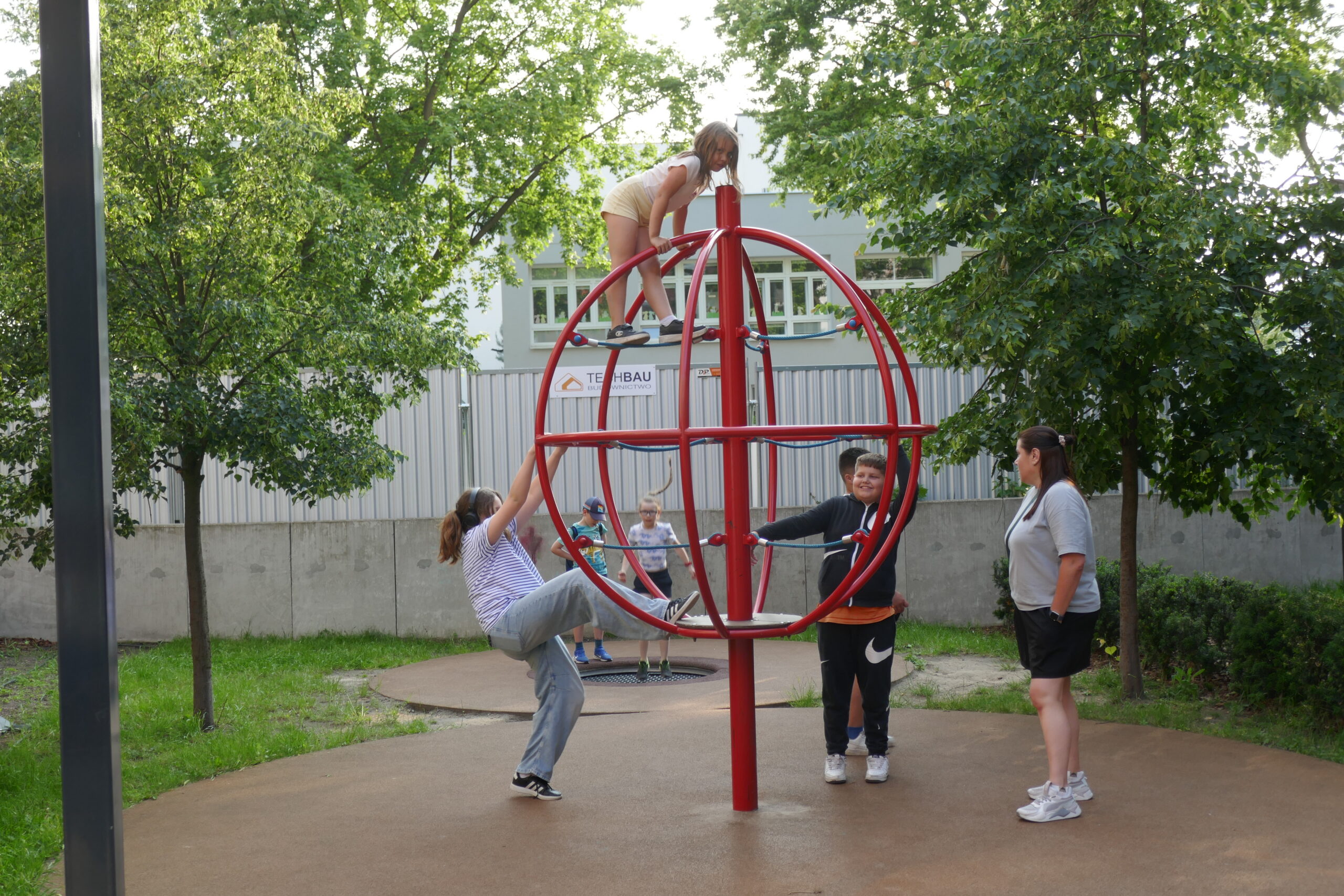
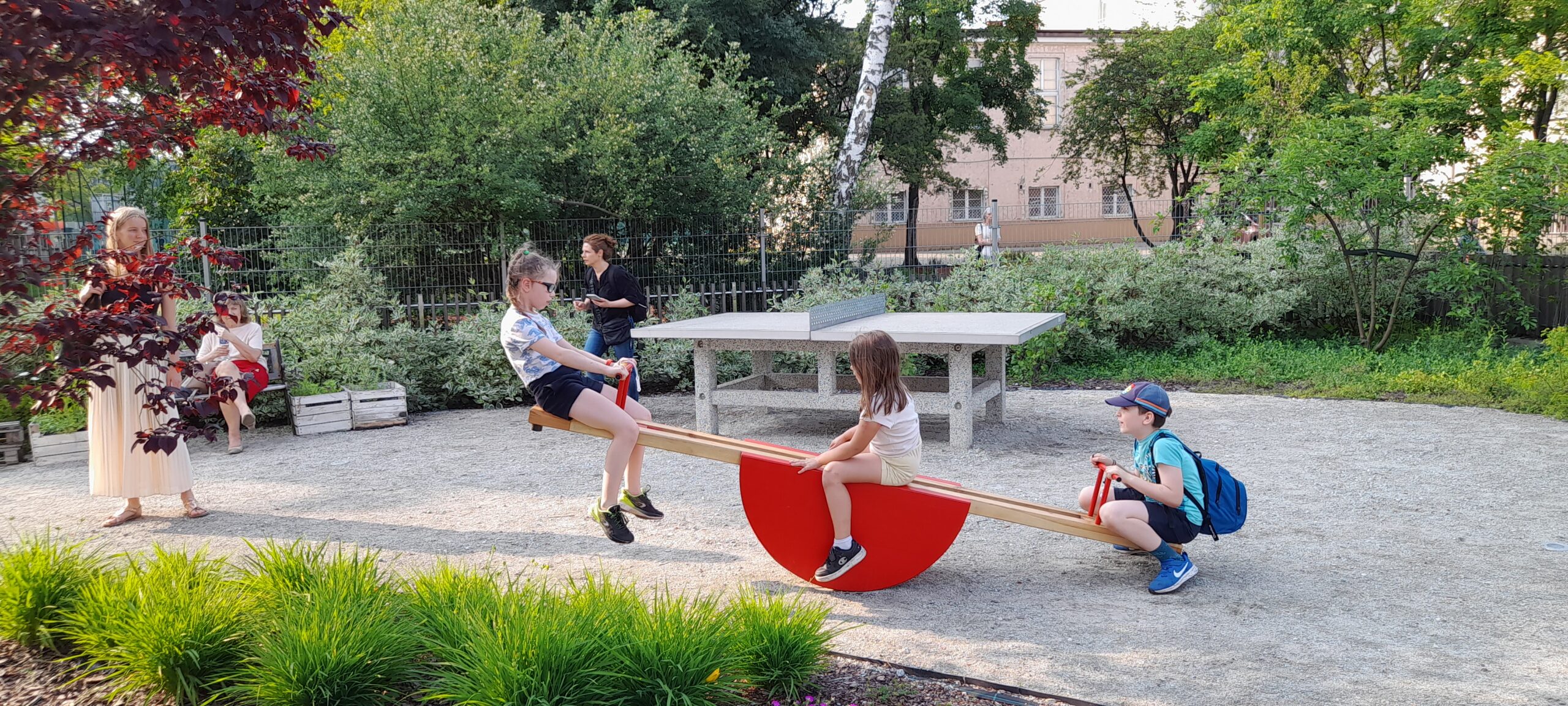
The second walk was more intentional — the children eagerly took the initiative, and their confidence and sense of agency clearly grew. The field activities made it possible to expand the list of mapped locations and deepen their reflections on the quality of these places and the role they play in the students’ everyday lives.
Each meeting concluded with a brief evaluation, during which the participants could share their impressions and opinions. From the facilitators’ perspective, all sessions were conducted in a positive atmosphere, with the children remaining active, creative, and eager to participate. The participatory methods — especially taking photos, working with the map, and assuming the role of guides — proved effective and engaging.
As a result, the three sessions formed a coherent process in which the participants:
The entire cycle allowed the children not only to get to know their neighborhood better but also to understand how the surrounding space affects their daily behaviors, safety, and opportunities for active leisure.